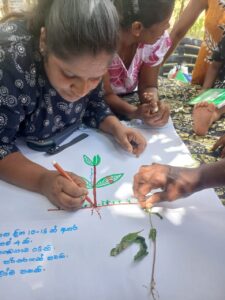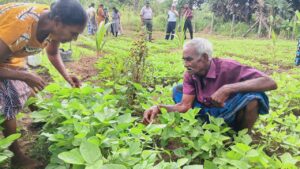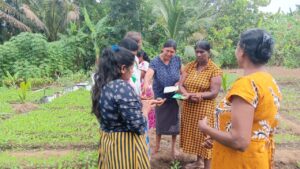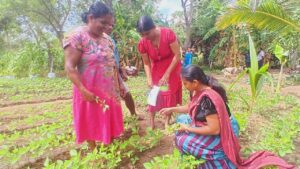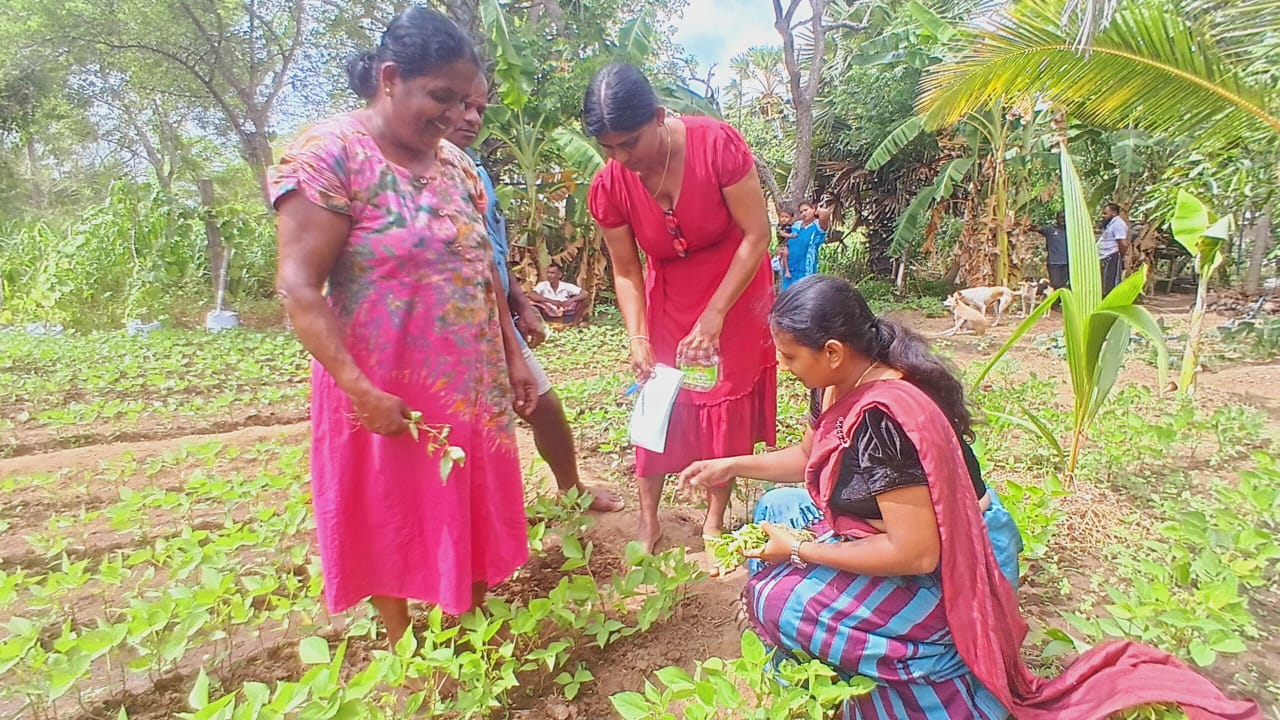
The Farmer Field School (FFS) is a participatory training approach designed to empower farmers with the knowledge, skills, and confidence to make informed decisions in agriculture. Instead of relying only on external advice, farmers learn through hands-on field demonstrations, group discussions, and observation-based learning.
Key features of the FFS program include:
Field-based learning: Training takes place directly in farmers’ fields, allowing them to observe crop growth, pest dynamics, and soil conditions in real time.
Agro-Ecosystem Analysis (AESA): Farmers actively monitor and record field conditions, then use charts and discussions to analyze issues and decide on crop management strategies.
Interactive participation: Farmers work in groups, share their experiences, and learn collaboratively, which strengthens community knowledge.
Practical skills: Training covers topics such as pest and disease management, soil preparation, fertilizer application, and the use of modern agricultural tools.
Through this method, farmers not only gain technical knowledge but also build the capacity to solve problems independently, adapt to local conditions, and apply sustainable practices.
The FFS approach has been implemented successfully across project districts, improving crop management, increasing yields, and strengthening farmers’ resilience.