Programme to restore tank-associated catchment areas implemented in collaboration with the Department of Forest Conservation
Protecting water catchment areas and restoring degraded ecosystems are essential to ensuring the long-term sustainability of village tank systems. Through tree planting and maintenance in degraded catchment areas, the programme aims to conserve soil, protect water resources and strengthen the climate resilience of farming communities.
The Smallholder Agribusiness and Resilience Project (SARP), implemented under the Ministry of Agriculture, Livestock, Lands and Irrigation, is carrying out a Catchment Restoration Programme in collaboration with the Department of Forest Conservation (DFC), under a Memorandum of Agreement (MoA).
Under the first phase, 562.91 hectares of degraded forest land across 46 identified tank catchments in Anuradhapura, Kurunegala and Puttalam districts were selected for restoration.
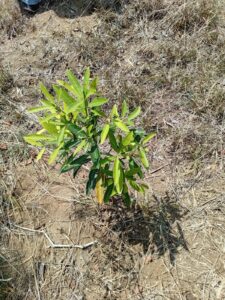
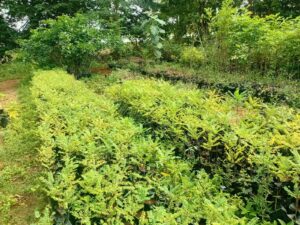
In November 2025, tree planting was carried out at selected sites in Anuradhapura District. According to DFC records, 112,200 seedlings have been planted across 413.9 hectares. Maintenance activities are ongoing, while seedlings intended for planting in Kurunegala and Puttalam districts are being maintained at DFC nurseries. Planting in these districts is scheduled to commence in November 2026.
A range of tree species suited to local environmental conditions has been established under the programme. These include Coral plant, Indian butter tree, Arjun tree, Macassar oil tree, Beech tree, Java plum, Indian persimmon and Tamarind. The selection of suitable species aims to improve the ecological condition of catchment areas and restore degraded forest land.
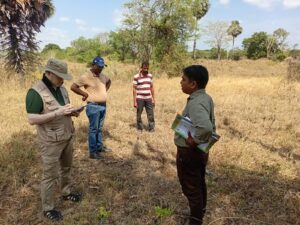
The programme also focuses on the continued maintenance and monitoring of planted areas in collaboration with the DFC and relevant community representatives. Proposed future activities include boundary planting, integrated small home gardens, and alley cropping and contour hedgerows, where appropriate.
Through these efforts, SARP and the DFC aim to strengthen the conservation of tank catchment areas, protect soil and water resources, and support more climate-resilient agricultural systems. Ensuring the proper maintenance and long-term protection of planted trees is a key part of delivering sustainable benefits to tank-associated ecosystems and the farming communities that depend on them.