


Ensuring food security for vulnerable communities in Sri Lanka’s dry zone remains one of the key objectives of the Smallholder Agribusiness and Resilience Project (SARP). Beyond increasing agricultural production, the project focuses on improving household nutrition, particularly addressing protein deficiencies and malnutrition among targeted beneficiaries.
A Sustainable Solution to Malnutrition
Among the various interventions introduced under SARP, the inland fisheries program has emerged as a highly impactful initiative. Inland fisheries provide:
-
A reliable and affordable source of daily protein
-
An additional stream of household income
-
Opportunities for value-added production and local enterprise development
-
Climate-resilient livelihood options suited to the dry zone ecosystem
By promoting sustainable aquaculture practices in village tanks and reservoirs, the program strengthens both nutritional security and rural economic development.
Harvesting Success at Aluthgama Bellankadawala Tank
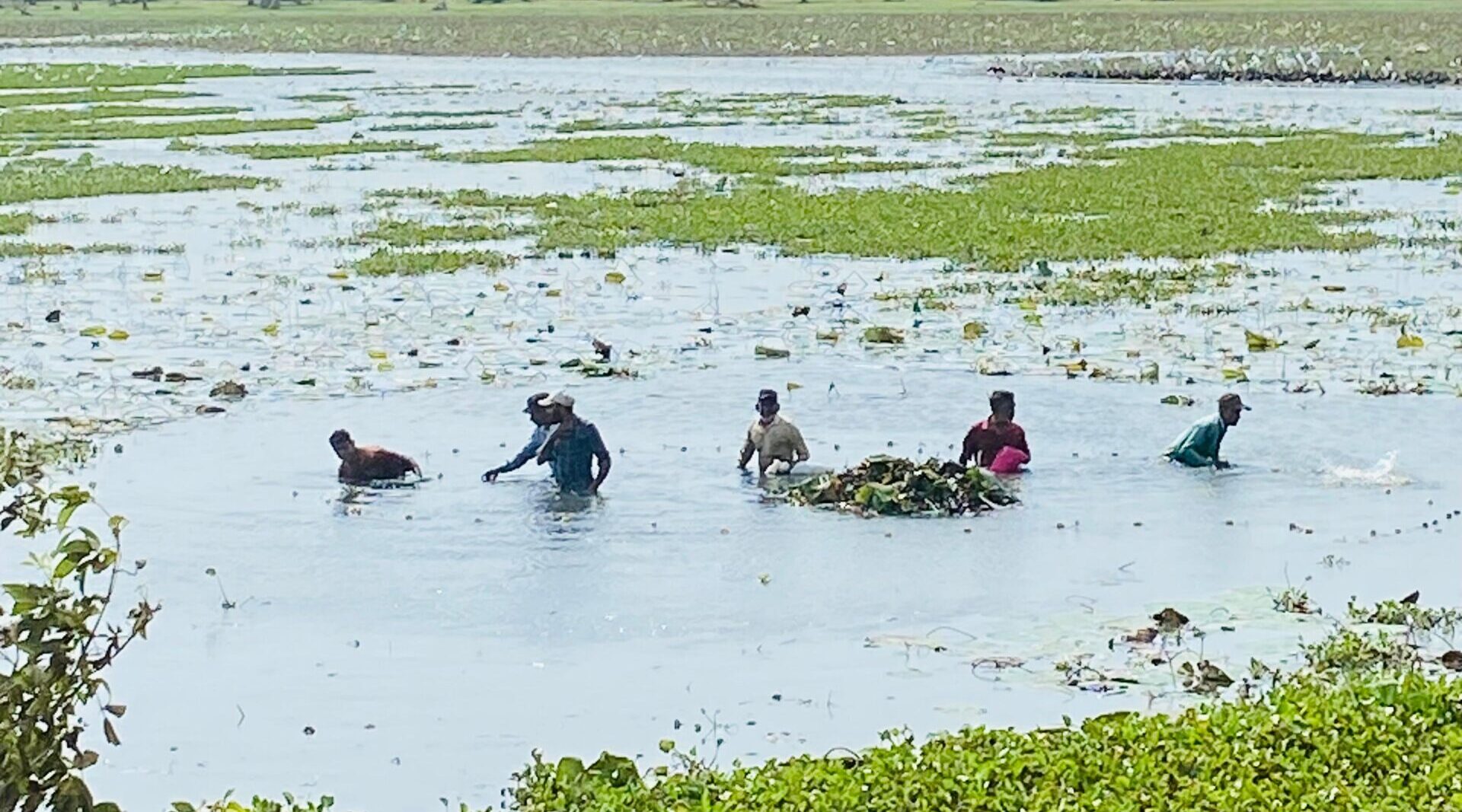
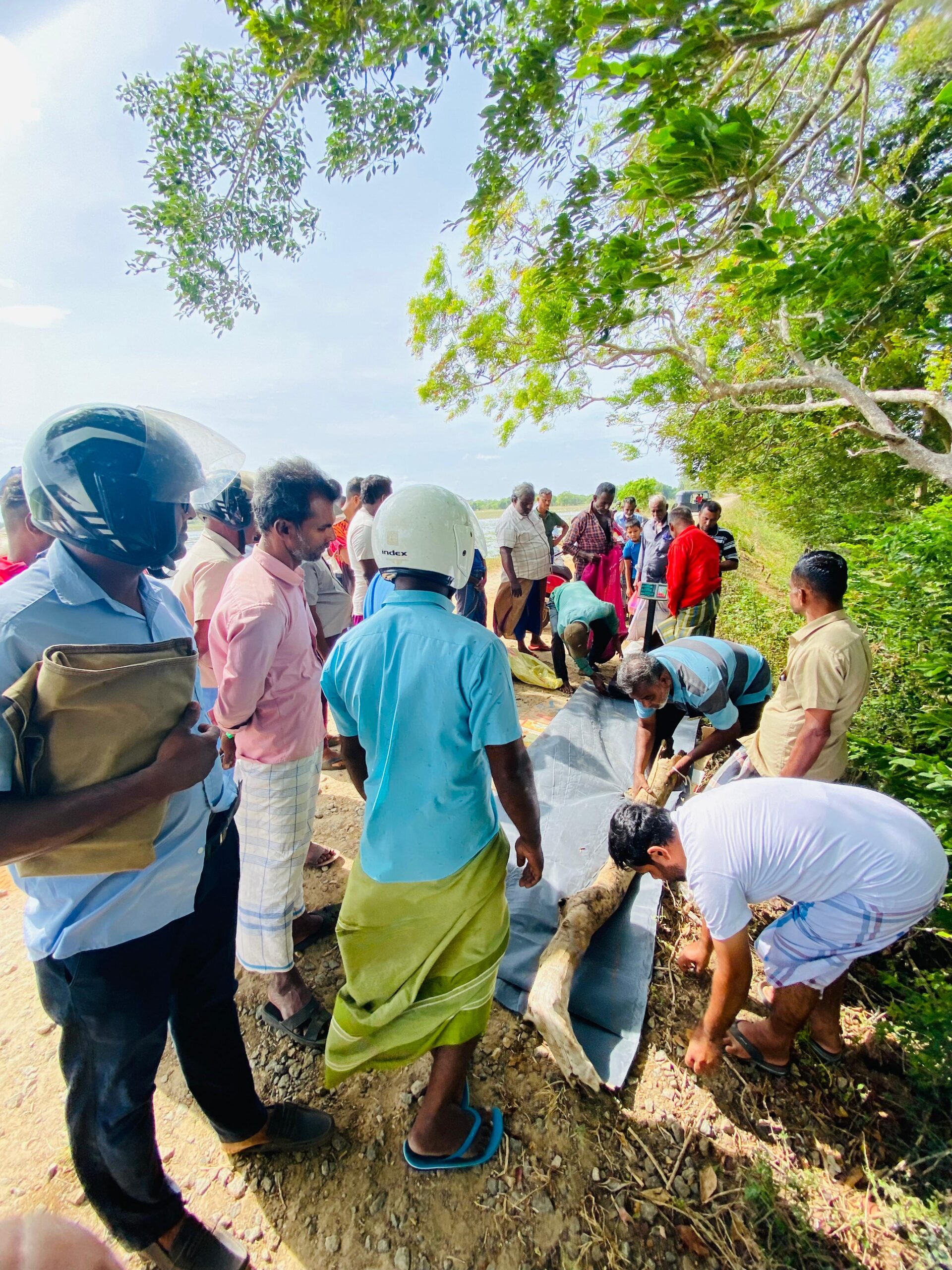
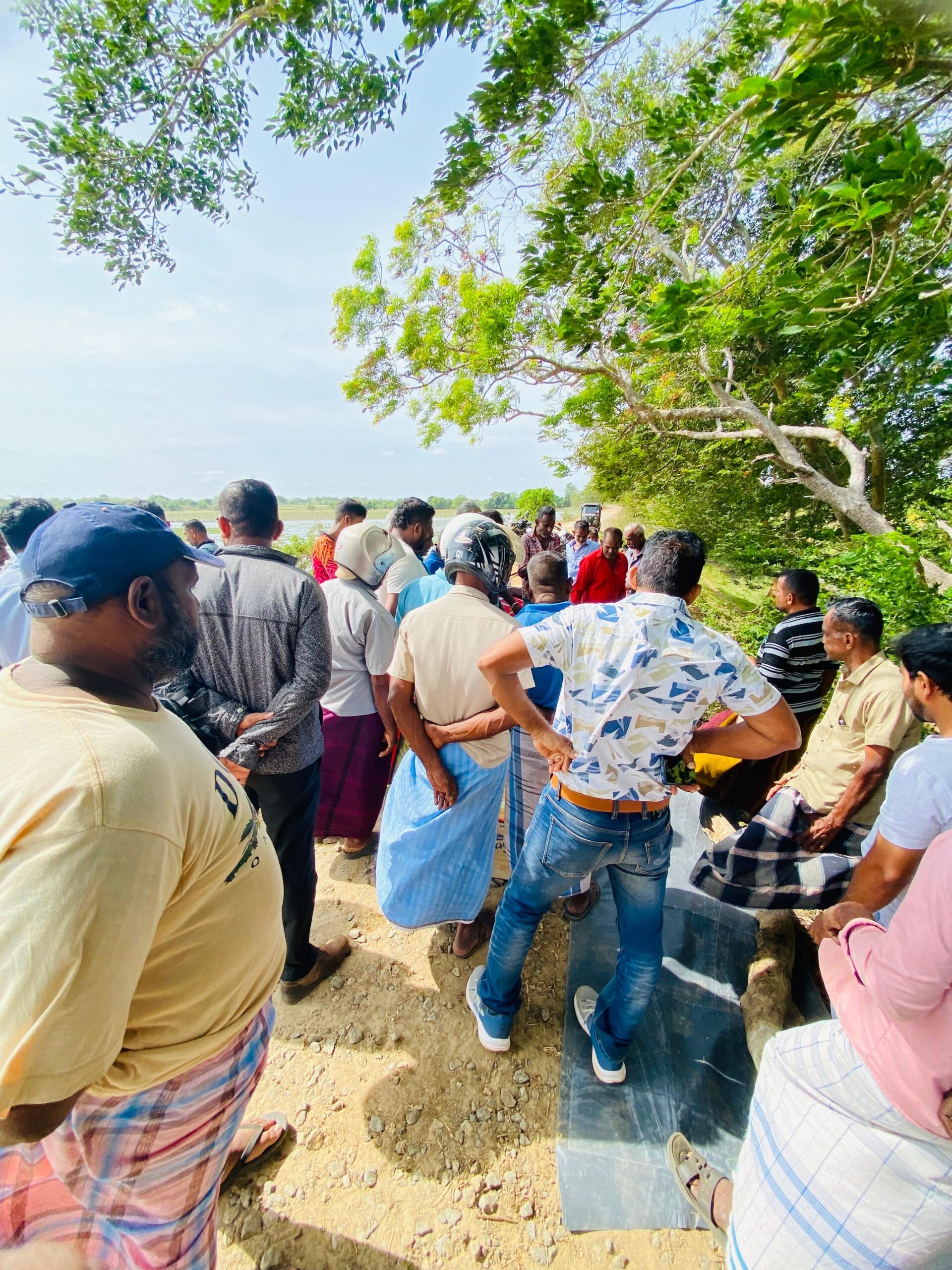
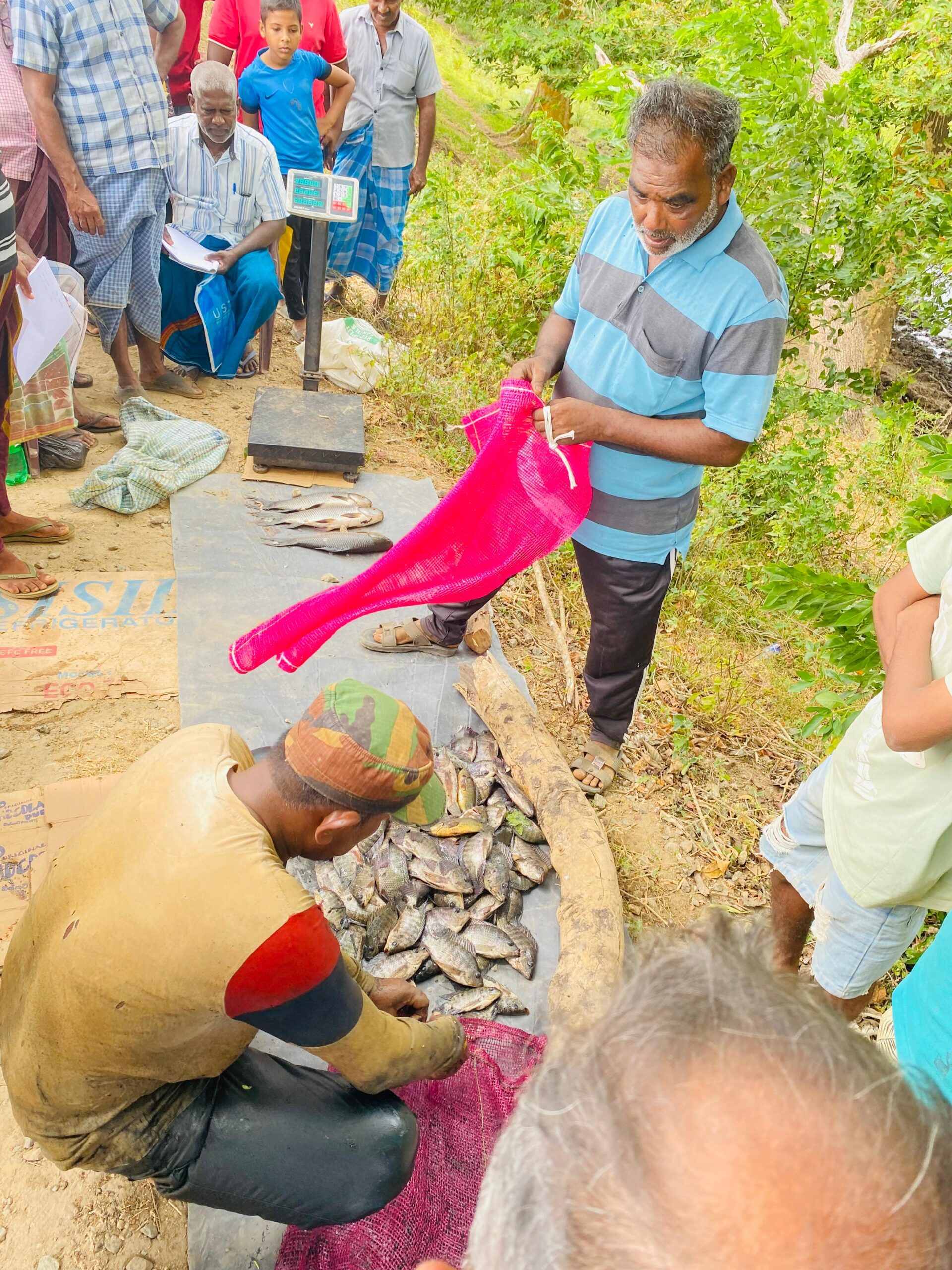
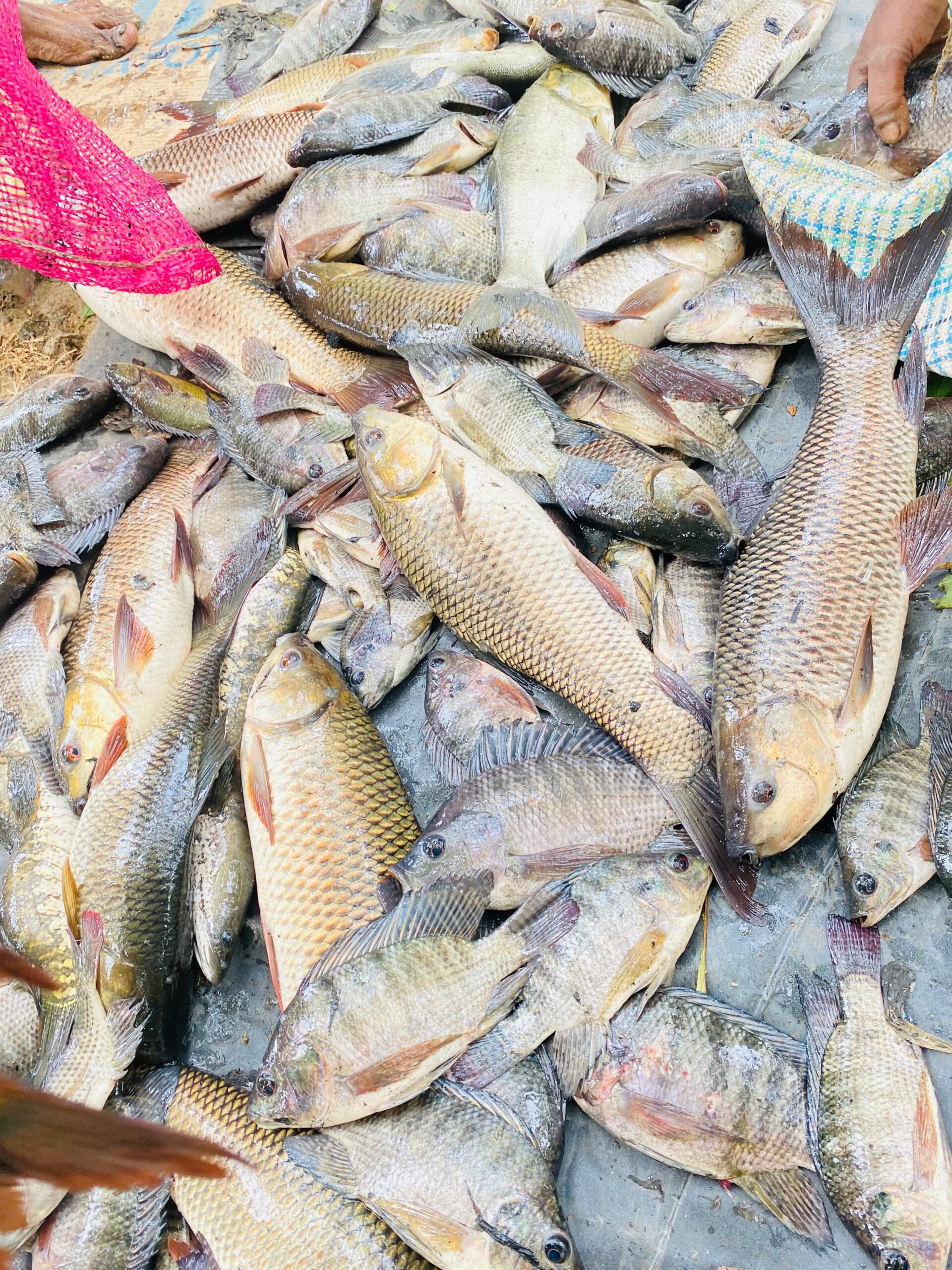
With the technical guidance and support of National Aquaculture Development Authority (NAQDA), SARP recently facilitated the harvesting of fish fingerlings and freshwater prawns from the Aluthgama Bellankadawala tank.
The initiative resulted in:
-
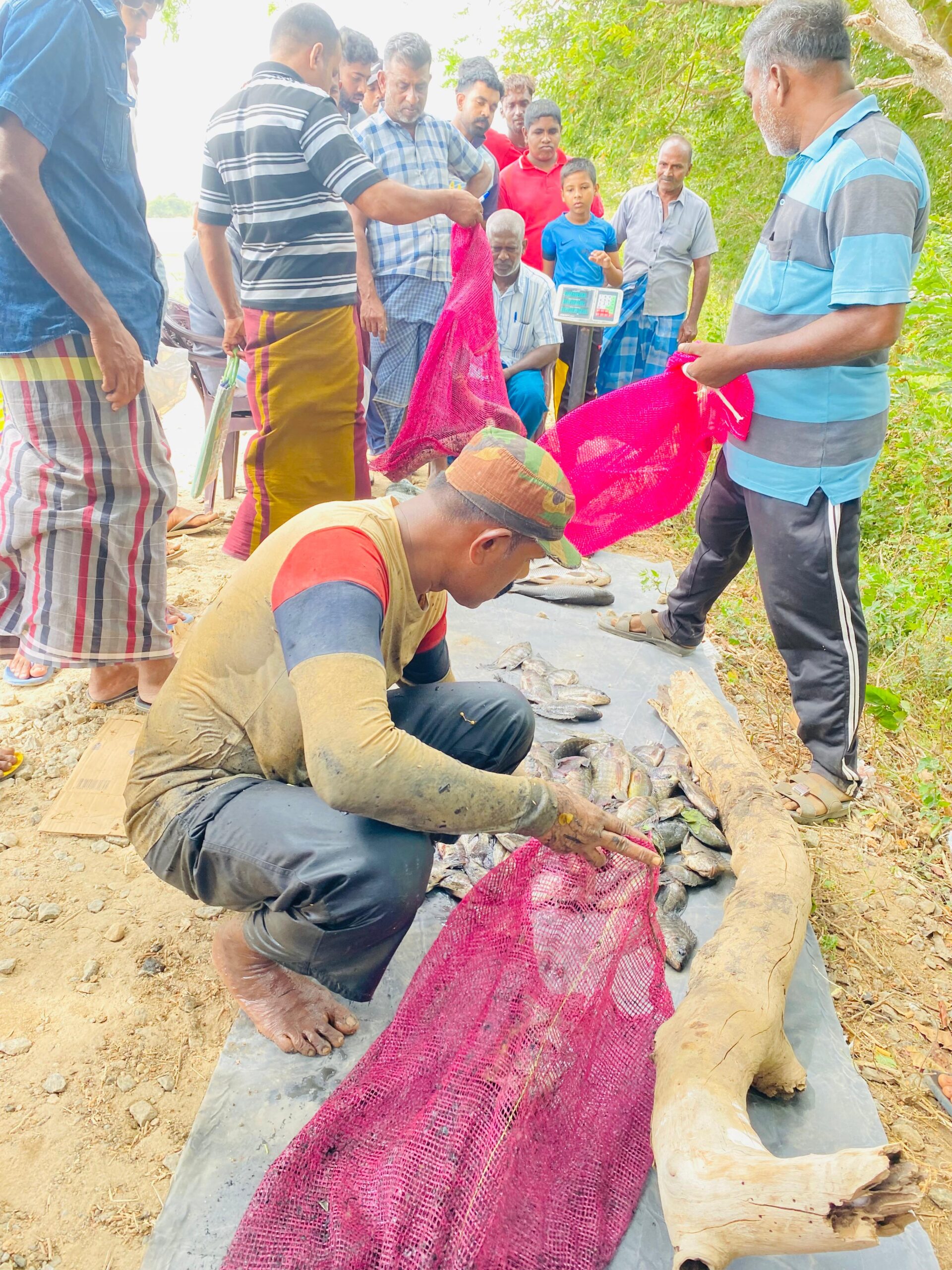
106.2 kilograms of fish and freshwater prawns harvested
-
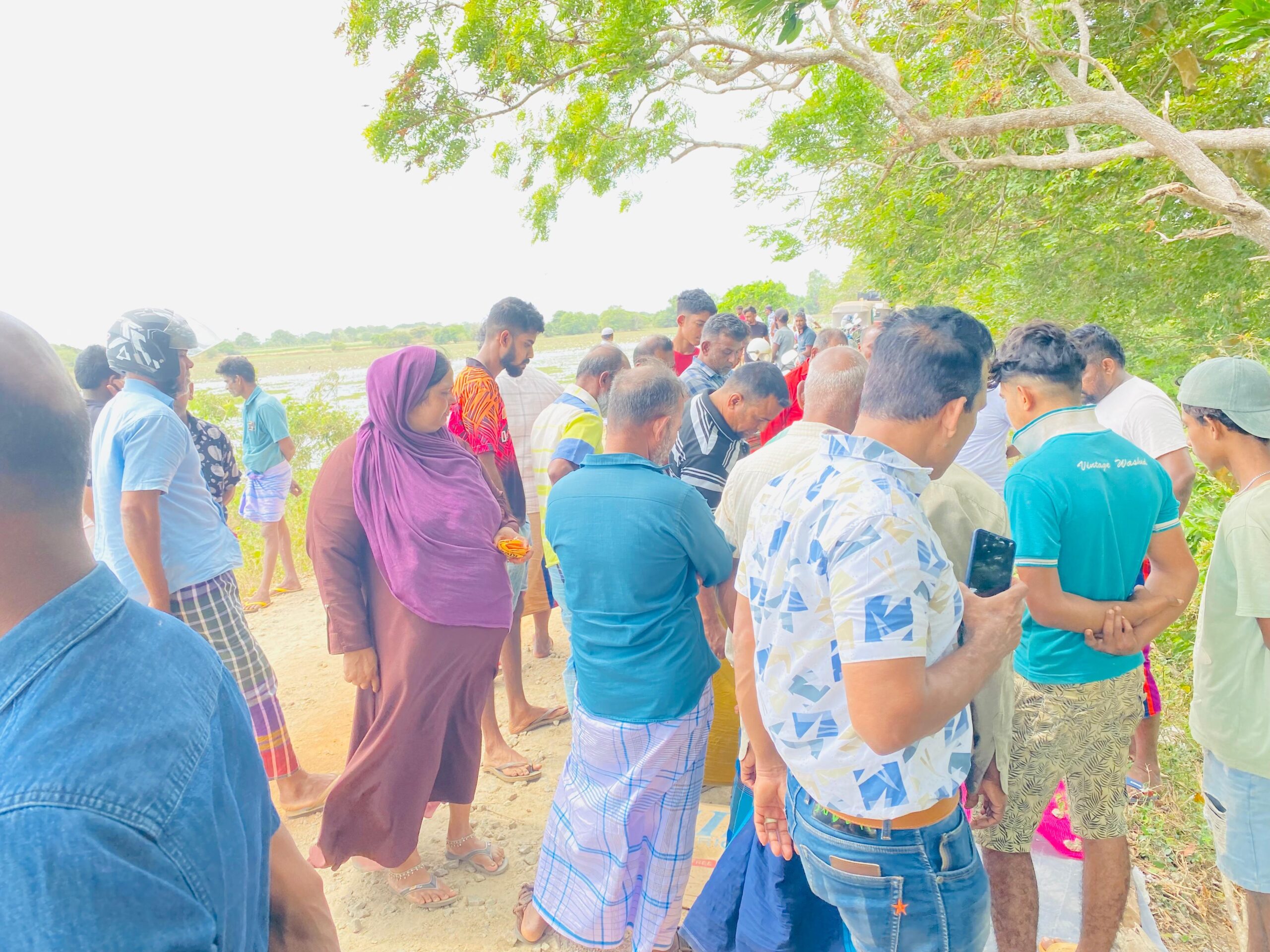
Distribution to 55 beneficiary families
-
Sales conducted at a highly affordable price through the local fisheries society
This approach ensured that families not only gained access to fresh, nutritious protein but also benefited from a community-based marketing mechanism that retained value within the locality.
Nutrition Meets Economic Empowerment
The inland fisheries initiative demonstrates how integrated, community-driven interventions can simultaneously address:
-
Malnutrition and dietary gaps
-
Income diversification
-
Local value chain development
-
Community resilience to climate variability
By leveraging existing water bodies and strengthening partnerships with institutions like NAQDA, SARP continues to transform traditional tank-based systems into engines of nutrition and economic growth.
Moving Forward
This initiative marks another meaningful step toward building resilient, food-secure communities in Sri Lanka’s dry zone. Through sustainable aquaculture, SARP is not only improving access to nutritious food but also empowering rural households to become active participants in local economic development.
Together, nutrition security and livelihood enhancement are shaping a more resilient future for dry zone communities.
